Here is a detailed 1200-word article on “Action Notch: Touch the Notch” written in a clear, SEO-friendly, and reader-engaging style.
Action Notch: Touch the Notch – Turning Your Phone’s Notch into a Smart Control
Smartphone design has evolved rapidly over the past decade, and one of the most noticeable changes has been the introduction of the display notch. Initially criticized for cutting into screen space, the notch has gradually become a standard design element on many Android and iOS devices. But what if the notch could do more than just hold a camera and sensors? This is where Action Notch – Touch the Notch comes into play. It transforms the notch from a passive design feature into an interactive control center.
In this article, we’ll explore what Action Notch is, how it works, its key features, benefits, limitations, and why it has become popular among Android users who love customization and productivity tools.
What Is Action Notch: Touch the Notch?
Action Notch is an Android application that allows users to assign actions to gestures performed around the phone’s notch or camera cutout area. Instead of being just a visual element, the notch becomes a touch-sensitive trigger for various shortcuts and commands.
With Action Notch, users can perform actions such as:
- Adjusting volume
- Taking screenshots
- Opening apps
- Locking the screen
- Controlling music playback
- Activating the flashlight
All of this happens simply by tapping, double-tapping, or long-pressing the notch area.
How Action Notch Works
Action Notch does not physically modify your screen hardware. Instead, it uses Android accessibility services to detect touch input near the notch area. Once permission is granted, the app listens for gestures in a defined region at the top of the screen.
Gesture Detection
The app recognizes different types of interactions, such as:
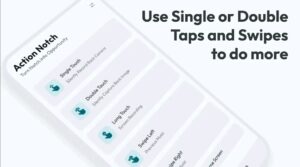
- Single tap
- Double tap
- Long press
- Swipe gestures (on supported devices)
Each gesture can be mapped to a specific action chosen by the user.
Compatibility
Action Notch works best on:
- Phones with a notch or punch-hole camera
- Android devices running Android 8.0 or higher
Even phones without a traditional notch can sometimes use the app by defining a virtual notch area.
Key Features of Action Notch
1. Customizable Gestures
Users can assign different actions to different gestures. For example:
- Single tap: Increase volume
- Double tap: Take a screenshot
- Long press: Turn on flashlight
This level of customization allows users to adapt the app to their daily habits.
2. Wide Range of Actions
Action Notch supports dozens of built-in actions, including:
- Media controls (play, pause, next track)
- System actions (home, back, recent apps)
- Hardware toggles (Wi-Fi, Bluetooth, flashlight)
- App shortcuts (open camera, WhatsApp, Instagram, etc.)
3. Visual Feedback
The app provides optional visual effects and animations around the notch area when an action is triggered. This gives users confirmation that their touch has been registered.
4. Sensitivity Control
Users can adjust:
- Touch sensitivity
- Gesture delay
- Touch area size
This helps avoid accidental triggers while still keeping the notch responsive.
5. Battery Optimization
Action Notch is designed to run efficiently in the background. While it does require accessibility access, it consumes minimal battery when properly configured.
Why People Use Action Notch
1. Better One-Handed Use
Reaching physical buttons like volume or power can be uncomfortable, especially on large phones. Action Notch places essential controls right under your thumb, improving usability.
2. Faster Access to Common Tasks
Instead of navigating menus or pulling down notification panels, users can perform actions instantly by touching the notch.
3. Personalization and Customization
Android users love customization, and Action Notch fits perfectly into this culture. It turns a static design element into something personal and functional.
4. Reduced Wear on Buttons
Using the notch for actions reduces reliance on physical buttons, potentially increasing their lifespan.
Action Notch vs Physical Buttons
| Feature | Action Notch | Physical Buttons |
|---|---|---|
| Customization | High | Very limited |
| Ease of Access | Excellent | Depends on hand size |
| Wear & Tear | None | Increases over time |
| Visual Feedback | Optional animations | None |
| Learning Curve | Small | None |
While physical buttons are reliable, Action Notch offers flexibility and modern interaction methods.
Privacy and Permissions
Since Action Notch uses accessibility services, some users worry about privacy. It’s important to note:
- The app does not read personal data
- It does not capture screen content
- Accessibility is used only to detect touch gestures
Still, users should always download apps from trusted sources like the Google Play Store and review permissions carefully.
Limitations of Action Notch
Despite its usefulness, Action Notch has some limitations:
1. Accidental Touches
If sensitivity is set too high, accidental taps may trigger actions unintentionally. Proper configuration is necessary.
2. Device Compatibility
Some phones with aggressive battery optimization may restrict background services, affecting performance.
3. Not a Physical Sensor
The notch itself is not pressure-sensitive. The app simulates touch detection in a specific screen area, which may not feel as precise as hardware buttons.
4. Premium Features
Some advanced features may be locked behind a premium version, depending on the app variant.
Who Should Use Action Notch?
Action Notch is ideal for:
- Android power users
- People who enjoy UI customization
- Users with large-screen phones
- Content creators and multitaskers
- Anyone looking for faster shortcuts
If you rarely customize your phone or prefer stock behavior, the app may feel unnecessary. But for those who love efficiency, it can be a game changer.
Tips for Best Use
- Start with simple actions like volume control
- Adjust sensitivity gradually
- Avoid assigning critical actions to single taps
- Use visual feedback during setup
- Exclude apps where accidental touches may be frequent (like games)
Download
The Future of Notch Interaction
As smartphone design continues to evolve—with punch holes, under-display cameras, and edge screens—the idea behind Action Notch represents a broader trend: making every part of the screen interactive.
Manufacturers may eventually integrate native notch gestures into Android itself. Until then, apps like Action Notch provide a glimpse into what’s possible when software creativity meets hardware design.
Conclusion
Action Notch: Touch the Notch redefines how users interact with their smartphones. By transforming the notch into a customizable touch control, it turns a once-criticized design feature into a powerful productivity tool. With flexible gestures, wide action support, and thoughtful customization options, Action Notch enhances usability without changing hardware.
While it’s not perfect and requires careful setup, its benefits far outweigh its limitations for users who value speed, convenience, and personalization. If you want to unlock the hidden potential of your phone’s notch, Action Notch is definitely worth exploring.